How Did China’s Beauty Industry Get Here?
By The Olivia
Independent Content Strategist for the China Market
This post is part of the “Marketing in China” series. Click here to view the series introduction and why it was created.
China’s Beauty Industry: The First “Big Topic” of the New Year
January 2026 isn’t even over yet, and the first major topic in China’s beauty industry has already surfaced.
Benny (Dong Zichu) recently released a video, speaking from the perspective of a beauty KOL, about the current state of China’s beauty scene. His conclusion, put simply, was this: China’s beauty industry has already fallen apart.
For those unfamiliar with him, a brief introduction.
Benny (Dong Zichu) is a top-tier Chinese beauty creator with over a million followers across Bilibili and Weibo. He also founded a beauty brand called CROXX, once seen as a representative case of “creator-founded beauty brands” in China. The brand has since ceased operations. That experience makes him someone who has seen the industry from multiple angles.
Using this moment as a starting point, I want to step back and ask a broader question:
What has China’s beauty market actually gone through over the past decade—and how did it end up where it is today?
What Has China’s Beauty Market Been Through?
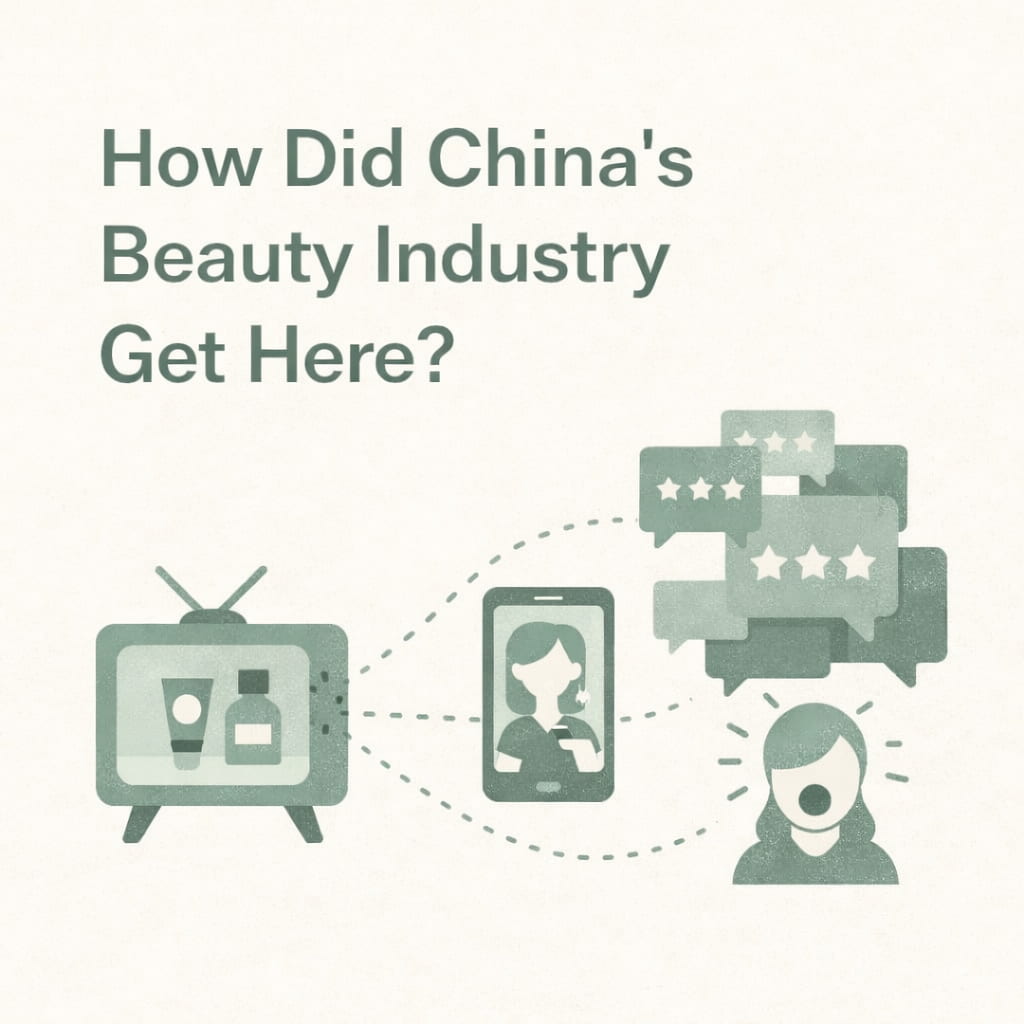
If we stretch the timeline a bit, the evolution of beauty content in China can roughly be divided into three stages.
Stage One: When Traditional Advertising Still Had Real Influence (Approx. 2005–2013)
During this period, traditional advertising was still the primary source of beauty information.
TVC, press, OOH, and brand-owned retail channels defined what a product was, what it claimed to do, and who it was meant for. Brand communication was largely one-directional.
At the time, this model still worked.
Stage Two: Traditional Advertising Loses Credibility, Beauty KOLs Rise (Approx. 2014–2018)
Things began to shift in the second stage.
Traditional advertising started to feel off. As I’ve written in earlier pieces, once ads stopped sounding like real human language, people simply stopped paying attention.
This created space for the first wave of beauty creators to rise—and they filled that space quickly.
What they did was relatively straightforward: unboxings, product reviews, yearly beauty favorites. Many of them weren’t even trying to make money at the beginning. They genuinely loved beauty products and shared what they had bought and used themselves. Advertising income came later, after their audiences grew.
At that time, there weren’t many beauty creators. But each one had a distinct voice and felt genuine. They were more like someone who had “done the homework for you.” Consumers watched them to see real, firsthand product experiences.
Stage Three: Content Explosion, Harder Choices for Consumers (2019–Present)
Then came the third stage.
Around 2019, platforms like Rednote and Douyin became the primary arenas for beauty content. Platforms entered systematic commercialization, and beauty content was clearly defined as something scalable and repeatable.
Content no longer relied primarily on long-term personal accumulation. Instead, it became dependent on three things: scripts, product selection, and distribution channels.
This shift dramatically changed the makeup of the beauty KOL space—from a relatively small group of distinctive creators with strong personal voices to a rapidly expanding crowd with highly standardized messaging and limited autonomy, much of it controlled by brands.
At this stage, platforms and brand-aligned creators gradually replaced the earlier, more individual voices. Beauty content became more abundant than ever. Content became increasingly segmented—by skin type, ingredient focus, use case, audience, and more.
But alongside this abundance, another problem emerged: information overload.
You can find almost anything—but it has become harder and harder to decide who to trust and what to choose. There is simply too much advertising, and it’s no longer clear whose words are reliable.
Closing
Personally, I also believe that China’s beauty industry has, in many ways, fallen apart.
This article can’t possibly cover every issue that has built up over the years. But I do believe it captures the big picture clearly enough—where China’s beauty industry stands today, and how it got here.
And precisely because the environment has become so intensely saturated, I think brands have reached a point where they need to pause and rethink—how they communicate, what kind of content they create, and how they plan to survive and grow going forward.
——
About This Series
If you’d like to explore this question from different angles, you may also read:
- How Did China’s Beauty Industry Get Here? (this article)
- Extension I: From a Brand Perspective: How China’s Beauty Market Got Here
- Extension II: How Beauty Copy in China Changed Over Time
← Back to All Articles
← Learn more about my services
You May Also Like:
Where Brand Storytelling Really Works in China
An exploration of how brand storytelling functions in the Chinese market, and why its real influence lies less in persuasion and more in shaping trust over time.
Ready to take your content further?
Let’s build a strategy that resonates in the Chinese market.
THE OLIVIA WAY
© 2025 THE OLIVIA WAY. All rights reserved.